

How to Measure for a Custom Ballroom & Latin Dance Dress: The Ultimate 2026 Guide
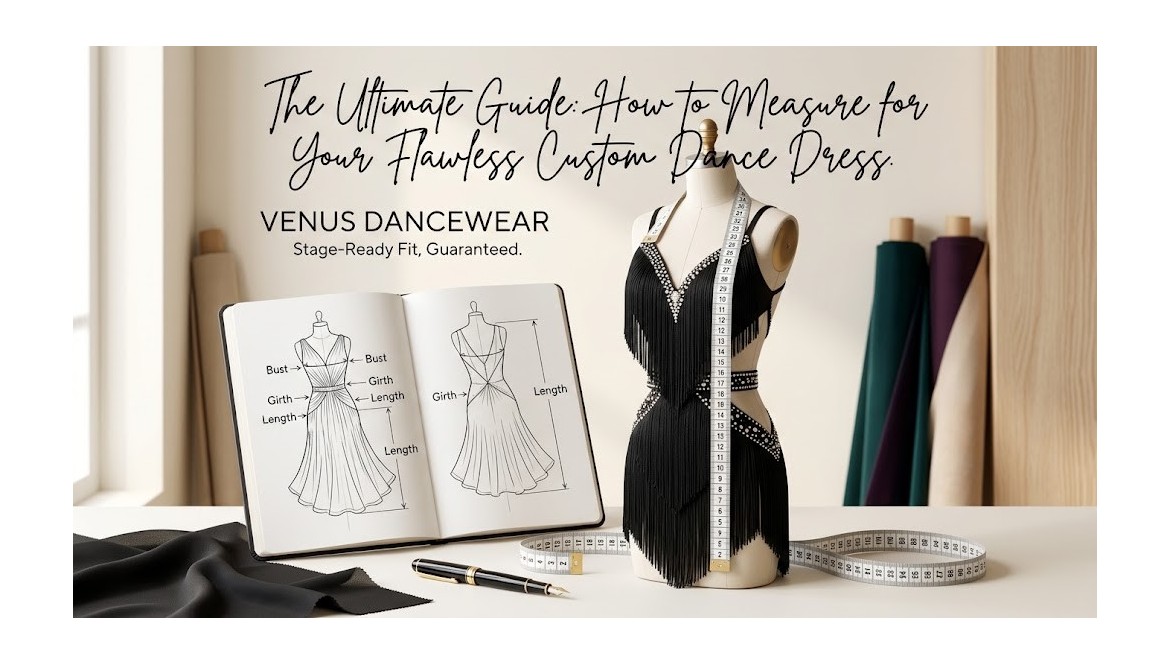
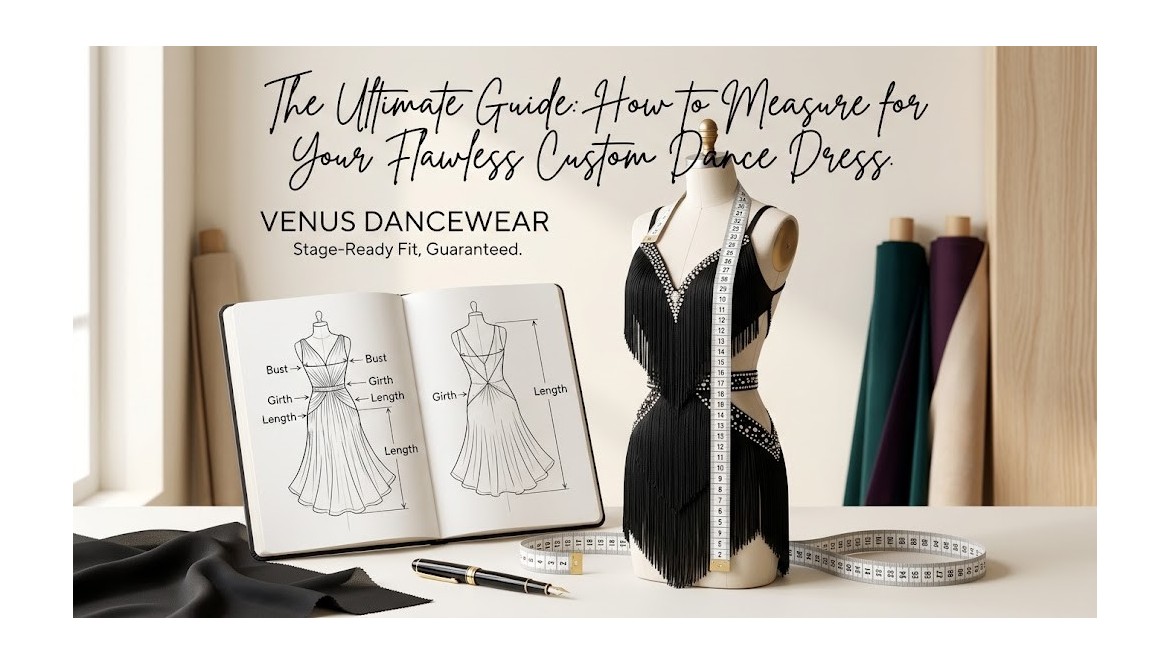
How to Measure for a Custom Ballroom & Latin Dance Dress: The Ultimate 2026 Guide
Finding the perfect competition dress is one of the most exciting milestones for any Latin or Ballroom dancer. However, off-the-rack sizing often fails on the dance floor. A garment that feels slightly restrictive during a casual try-on can severely limit your range of motion during a high-energy Cha-Cha or a sweeping Viennese Waltz.
At Venus Dancewear, over 95% of our competition dresses are fully custom-tailored to the dancer's exact physical contours. Based on fitting data from thousands of professional dancers worldwide, taking precise body measurements reduces post-delivery alteration requests by over 92%.
In this comprehensive guide, you will learn the exact tools, key measurement checkpoints, and professional tips needed to guarantee a flawless, stage-ready fit.
What You Need Before Starting
Before unrolling your measuring tape, prepare the following essential items:
A Flexible Cloth Measuring Tape: Never use a metal construction tape measure, as it will distort body curves and yield inaccurate numbers.
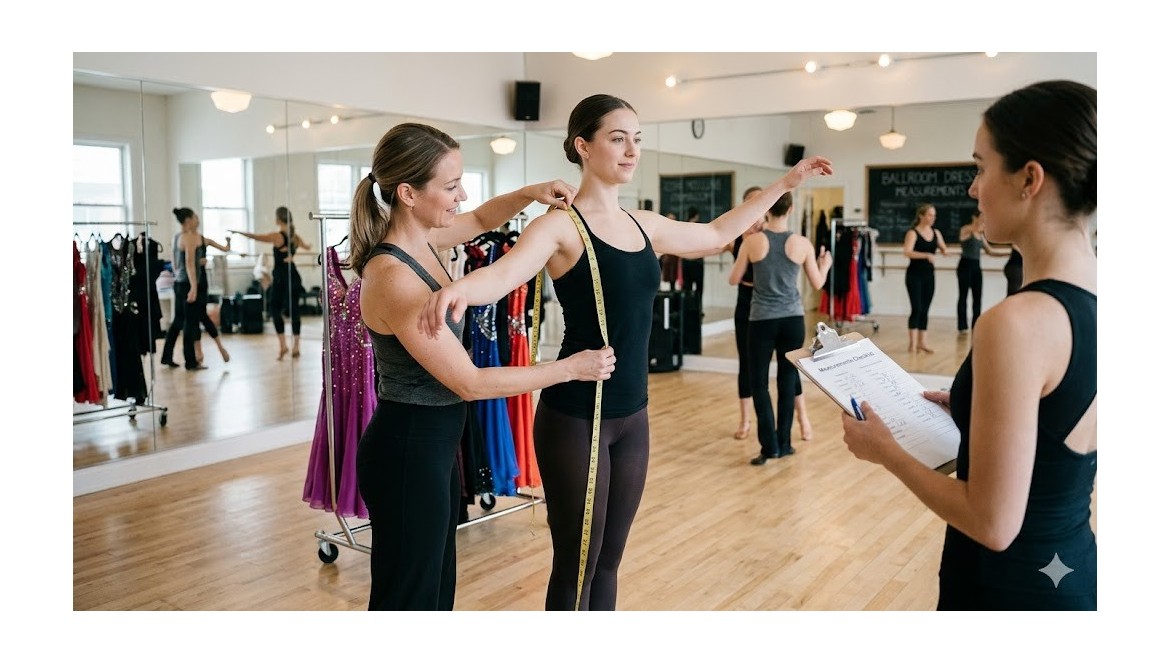
A Measuring Partner: Self-measurement often leads to slouching or improper posture. Always have a dance partner, friend, or coach assist you.
Proper Undergarments: Wear a unpadded, supportive bra and fitted dance shorts or underwear similar to what you will wear under your competition dress.
Bare Feet: Stand straight without shoes on a flat surface to get an accurate total height and torso measurement.
Key Measurement Checkpoints for Competition Dresses
Different dance disciplines require specialized measurement focus. Latin dresses require precise torso and diagonal length measurements to ensure fringe or asymmetrical hemlines move naturally. Ballroom (Smooth/Standard) gowns prioritize exact shoulder-to-hem lengths and neck circumferences for proper posture holding.
Below is the standard 8-point core measurement breakdown required for a custom Venus Dancewear gown:
| Measurement Point | How to Take the Measurement Correctly | Professional Fitting Tip |
| 1. Bust | Around the fullest part of the chest, parallel to the floor. | Keep arms relaxed at your sides; do not pull the tape too tight. |
| 2. Waist | Around the narrowest part of the natural waistline. | Stand relaxed—do not suck in your stomach or hold your breath. |
| 3. Hips | Around the fullest part of the buttocks (approx. 20cm below waist). | Keep feet together; ensure the tape stays strictly horizontal. |
| 4. Torso (Girth) | From shoulder center, over the bust, down through the crotch, and back to the starting point. | Critical for leotard-base dresses: Leave a 1-finger space for stretch elasticity. |
| 5. Shoulder Width | From the outer edge of one shoulder bone across the back to the other. | Maintain natural competition posture with shoulders down and back. |
| 6. Sleeve Length | From the shoulder edge down to the wrist bone with the arm slightly bent. | Crucial for long-sleeved mesh or velvet Latin designs. |
| 7. Total Height | Measured vertically from the top of the head to the floor without shoes. | Standing against a straight wall ensures 100% vertical accuracy. |
| 8. Desired Dress Length | From the neck/shoulder intersection down over the bust to the desired hem point. | Specify separate shortest and longest hem points for asymmetrical skirts. |
3 Critical Mistakes to Avoid When Measuring
1. Adding "Extra Room" for Comfort
Dance fabrics—such as high-grade 4-way stretch mesh, lycra, and premium georgette—are engineered to stretch. If you add extra centimeters to your measurements, the dress will bunch up around the waist and armholes under bright competition lights. Provide exact anatomical measurements; our master tailors automatically account for fabric elasticity.
2. Measuring Over Bulky Clothing
Taking measurements over jeans, thick sweatshirts, or padded push-up bras can add up to 3–5 cm (1.5 to 2 inches) of error. This results in a loose bodice that fails to hold its shape during rapid turns.
3. Ignoring Torso Girth
Many dancers rely solely on standard Bust-Waist-Hip (BWH) dimensions. However, in Latin and Ballroom dresses with integrated bodysuit bases, Torso Girth determines whether the dress pulls down on your shoulders or rides up at the waist during movement.
Frequently Asked Questions (FAQ)
Q: How long does it take to produce a custom-made dance dress?
A: Standard tailored production at Venus Dancewear takes 2 to 4 weeks, depending on the intricacy of the hand-applied Swarovski/Astra crystals, fringe placement, and skirt layering. Expedited rush production options are available for upcoming competition dates.
Q: Can I request custom color modifications or sleeve adjustments?
A: Absolutely. Every custom order can be personalized. You may specify custom color swatches, skirt lengths, sleeve style variations, or crystal densities directly in your order notes.
Q: What if my measurements change slightly before delivery?
A: Our dresses feature built-in 4-way stretch elasticity in key movement zones (torso, back panels, sleeves) to gracefully accommodate slight weight fluctuations (+/- 3 kg or 6 lbs) without compromising silhouette integrity.
Ready to Design Your Custom Competition Dress?
A custom-fit dance gown enhances not only your lines on the floor, but also your confidence before the judges. Explore our latest collections of Custom Ballroom Competition Dresses and Latin Dance Dresses, or submit your custom measurements to our design team today for a personal consultation.


Comments
No comment at this time!
Leave your comment