

How To Measure Yourself For a Ballroom Dress: The Ultimate Guide
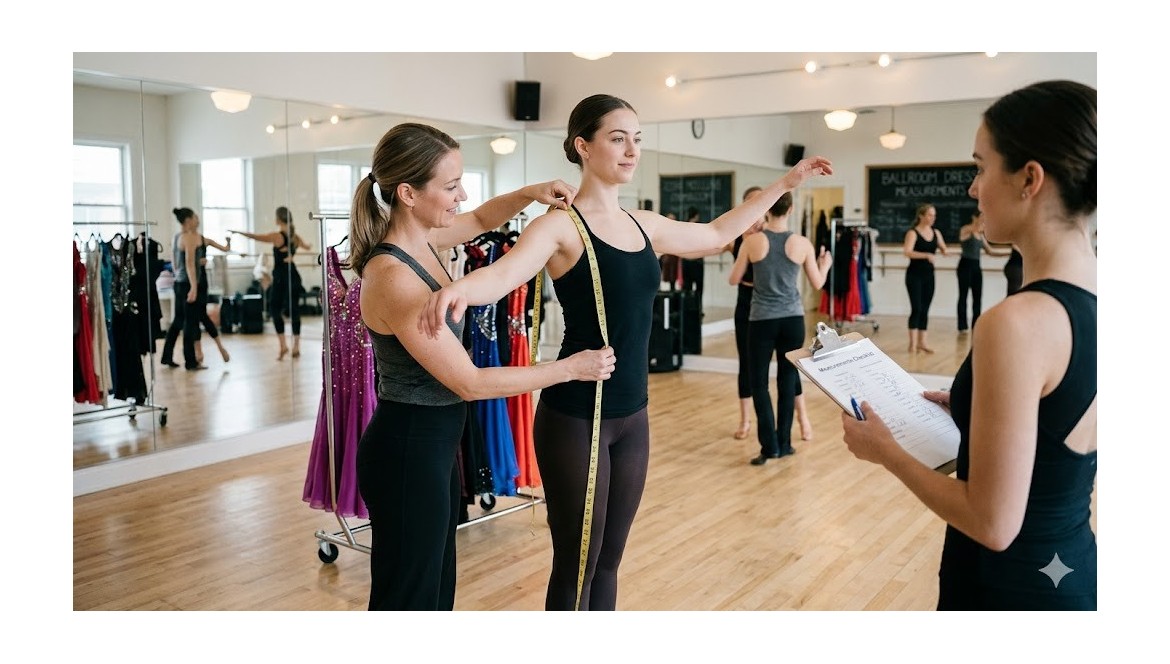
Learn how to take accurate body measurements for ballroom, Latin, and competition dresses. Step-by-step guide by Venus Dancewear for a flawless, custom-ready fit.
How To Measure Yourself For a Ballroom Dress: The Ultimate Guide
Stepping onto the dance floor, the lights hit the rhinestones, the music cues, and you take your frame. In that split second, your focus should be entirely on your technique, your partner, and the music—not on adjusting a slipping strap or worrying about an uneven hemline. When it comes to Dancesport, a perfectly fitting dress is not just a matter of aesthetics; it is a critical component of your athletic performance.
Whether you are sweeping across the floor in elegant, floating ballroom dresses or executing sharp, dynamic movements in fiery latin dresses, the fit of your garment dictates your freedom of movement and confidence. At Venus Dancewear, we believe that every dancer deserves a gown that feels like a second skin.
Buying dancewear online, especially high-end, custom-made ballroom competition dresses, is incredibly convenient and offers endless style options. However, it requires one crucial step: taking accurate body measurements. This comprehensive guide will walk you through exactly how to measure yourself to ensure a flawless, competitive-ready fit.
Why Accurate Measurements Matter in Dancesport
Unlike standard street clothing, ballroom and Latin dance dresses are highly specialized, high-performance garments. They are built on a stretch-fabric leotard base designed to move seamlessly with your body through extreme ranges of motion.
If a dress is too loose, it can look sloppy, obscure your body lines, and even become a tripping hazard. If it is too tight, it will restrict your arm extensions, compress your ribcage, and limit your breathing during a strenuous two-minute routine. Custom sizing eliminates these issues, but custom sizing is only as good as the measurements provided. By taking the time to measure correctly, you ensure your dress will enhance your silhouette and compliment your choreography.
Getting Prepared: Set Up for Success
Before you start wrapping a tape measure around yourself, take a few minutes to prepare. Accurate measuring is a science, and setting up the right conditions is key.
A Flexible Measuring Tape: Do not use a metal construction tape. You need a soft, flexible tailor’s measuring tape (fabric or plastic) that can hug the contours of your body.
The Right Undergarments: Measure yourself wearing the exact type of undergarments (bra and underwear) and tights you plan to wear under the dress. If your dress will have a built-in bra, wear a very thin, unpadded bra while measuring.
Dance Shoes: For length measurements, wearing your actual dance shoes is absolutely mandatory, as heel heights drastically change your posture and the distance to the floor.
Find a Helper: While it is possible to measure yourself in front of a mirror, it is highly recommended to have a friend, dance partner, or tailor help you. It is nearly impossible to keep the tape perfectly level across your back while holding it yourself.
Step-by-Step Guide: How to Take Your Measurements
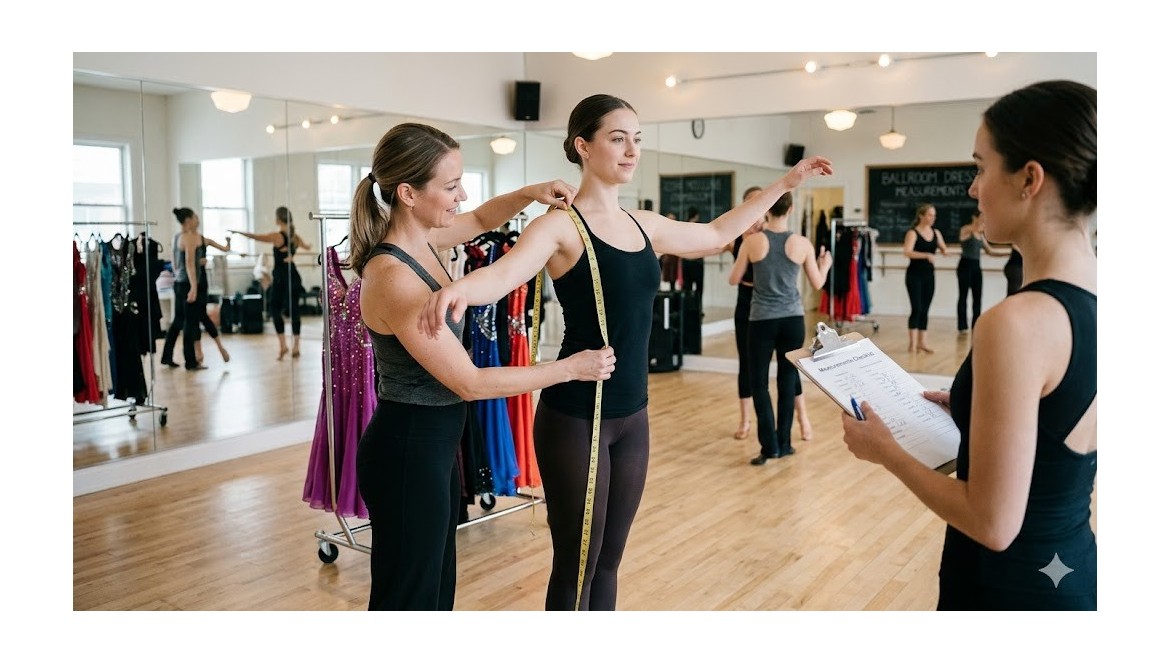
Stand up straight, relax your shoulders, and breathe normally. Keep the tape measure snug against your body, but not so tight that it digs into your skin. For the most precise custom fit, you will need to measure several different areas of your body.
1. The Upper Body
Neck Circumference: Measure around the base of your neck, leaving a little bit of breathing room (about one finger's width).
Bust / Chest: Lift your arms slightly and wrap the measuring tape around the fullest part of your bust. Ensure the tape is straight and parallel to the floor across your back.
Nipple to Nipple (Bust Point): Measure the distance from one bust point to the other. This ensures darts and built-in bra cups are placed perfectly.
Shoulder to Nipple: Measure from the top of your shoulder (where a bra strap would sit) straight down to the fullest part of your bust.
2. The Torso & Waist
Shoulder to Waist (Front & Back): Measure from the top of your shoulder down over your bust to your natural waistline. Do the same on your back, from the shoulder blade down to the waist.
Natural Waist: Your natural waist is the narrowest part of your torso, usually located just an inch or two above your belly button. Bend slightly to one side; the crease that forms is your natural waistline.
Girth (The Torso Loop): This is arguably the most important measurement for any Dancesport garment. Place the start of the tape measure at the top of one shoulder, run it down the front of your body, through your legs (crotch), and back up your spine to meet the starting point. This prevents the leotard base from riding up or pulling down.
3. The Lower Body & Lengths
Hips (Fullest Part): Stand with your heels together. Wrap the tape around the absolute fullest part of your hips and buttocks. The dress must stretch over this area comfortably.
Shoulder to Knee / Shoulder to Floor: With your dance shoes on, measure from the top of your shoulder straight down to your knee, and then straight down to the floor. This dictates the skirt length, whether you are ordering a short rhythm skirt or a sweeping standard gown.
4. Arms and Shoulders (For Sleeved Dresses)
Shoulder Width (Across the Back): Measure across your back from the edge of one shoulder point to the edge of the other.
Arm Girth (Bicep): Measure around the fullest part of your upper arm.
Sleeve Length: Place your hand on your hip so your elbow is bent at a 90-degree angle. Measure from the shoulder seam, down the outside of your arm, over the elbow, and to your wrist.
The Difference Between Standard and Latin Fittings
When submitting your measurements, keep the style of dance in mind.
Standard / Smooth: These dresses focus on top-line elegance and sweeping floor movements. Accurate shoulder, arm, and shoulder-to-floor measurements are vital here to ensure your floats drape perfectly and your skirt glides effortlessly above your shoes.
Latin / Rhythm: Latin routines require intense hip action, rapid spins, and wide leg extensions. The girth, waist, and hip measurements take top priority here. The leotard base must be impeccably fitted so the dress stays perfectly in place during sharp, explosive movements.
Final Tips for Ordering Custom Dancewear
Measure Twice, Order Once: Taking all your measurements a second time is the best way to catch accidental errors.
Use Centimeters: While inches are common in the US, centimeters provide a much higher level of precision. Most professional dressmakers prefer measurements in centimeters.
Be Honest: Do not measure for the body you hope to have by competition day. Measure the body you have right now. High-quality stretch fabrics will still accommodate minor weight fluctuations.
Bring Your Dream Dress to Life
Taking your own measurements might seem daunting at first, but it is the gateway to acquiring a professional, custom-fitted gown that will set you apart on the floor. At Venus Dancewear, we take pride in crafting exquisite, high-quality garments tailored to your unique shape and style.
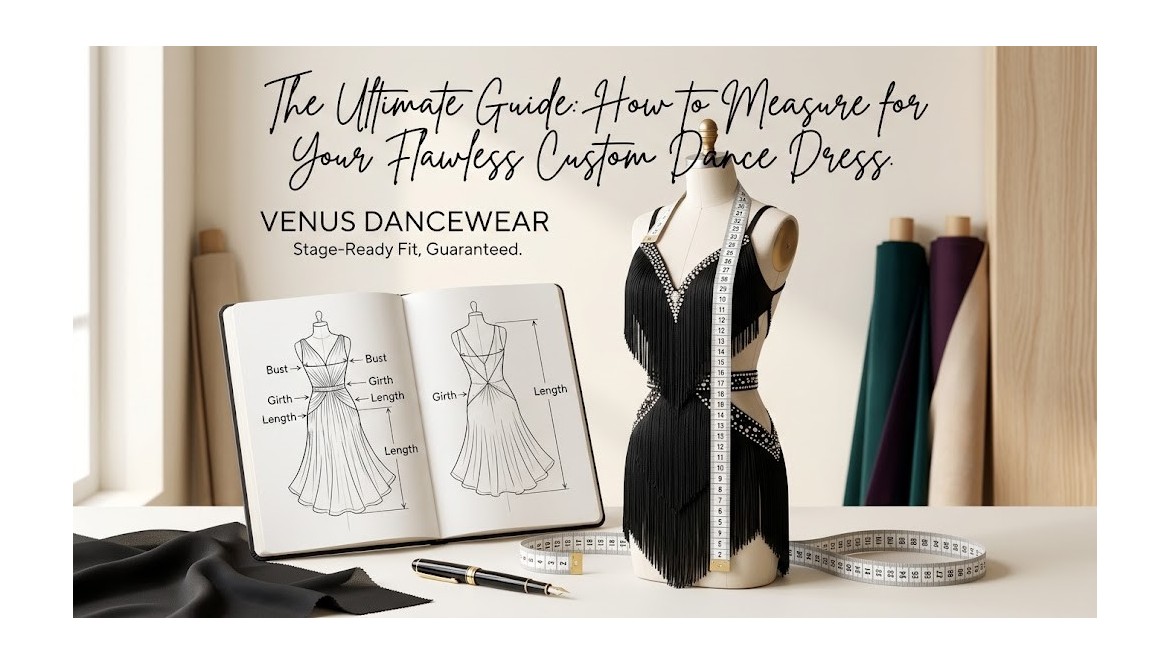
For a highly detailed, visual breakdown of every measurement required for our dresses, please refer to our official guide: Venus Dancewear Measurements Guide
Grab your measuring tape, follow the guide, and get ready to step onto the floor feeling secure, comfortable, and devastatingly beautiful. Happy dancing!


Comments
No comment at this time!
Leave your comment